A modern alternative to the traditional college path—built around real credentials, practical training, entrepreneurship, placement, and ownership.Raise your hand
WORKSHOP DIRECTORYSTATUS / INTEREST LIST
01
MANDATE
The Nation's Trade School, and Nothing Borrowed From Anyone Else
The University is the Nation's trade-school and workforce-development system. Its assignment is narrow and it is meant to stay that way: take a person who wants to work with their hands, their tools, or their own book of business, and move them from no skill to a working skill inside a defined number of shop hours. It is not a college in the American regulatory sense, it does not want to become one, and the fastest way to fail the people it serves would be to imitate an institution whose cost structure and timelines are the reason those people are looking elsewhere.
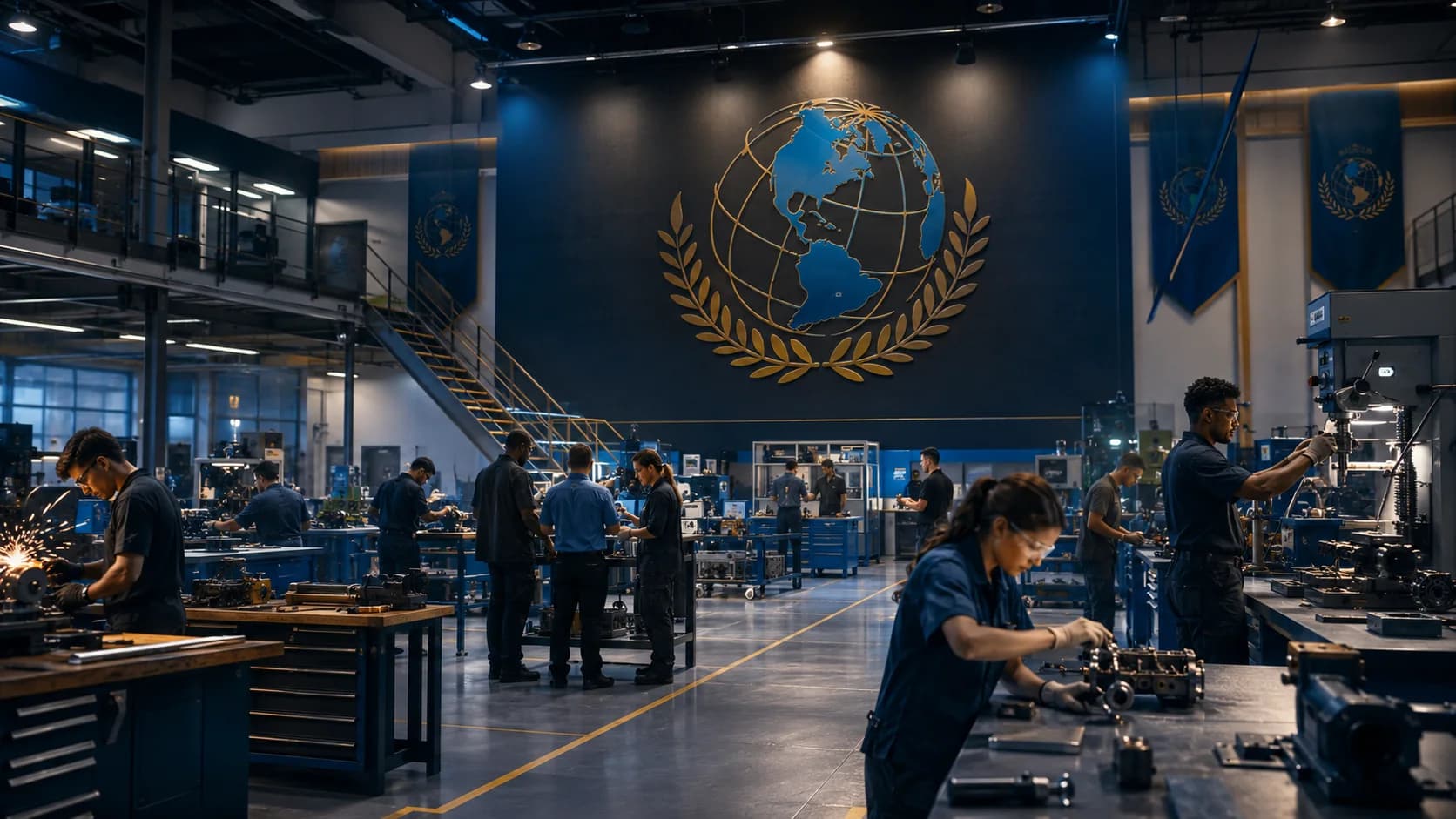
A trade program is defined by the work a graduate can be handed on a Monday morning. The University's curriculum planning starts from that end of the problem: a foreman, a shop owner, or a service manager describes the tasks a first-year hire has to perform without supervision, and the program is built backward from that list. The mechanical trades group — HVAC service, residential and light-commercial electrical, plumbing rough-in and service, and welding — is being specified this way, with bench time and shop time carrying the majority of the hours rather than lecture.
The Employer Sits at the Table Before the First Cohort
Workforce programs fail in a predictable way: a school trains for a trade nobody in that market is hiring for, and the graduates discover it after they have spent the money. The University's structure is meant to make that outcome harder. A trade floor is not scheduled to open in a city until employers in that city have reviewed the task list, confirmed the skills match their open roles, and agreed to take shop visits and evaluate graduates. That agreement is a working relationship, not a promise of employment.
On completion, a learner receives a Nation-issued certificate of completion. That document states the trade, the sequence completed, the shop and classroom hours logged, and the competencies a supervising instructor signed off on. It is issued by the Nation and it carries the weight the Nation and its employer partners give it. That is the whole of the claim, and it is stated this plainly on purpose.
Journeymen Teaching, Cohorts Small Enough to Correct
The instructional standard is being written around who does the teaching. The University intends to staff trade floors with working journeymen, licensed tradespeople, and shop operators who have earned their standing in the field, rather than with generalist instructors assigned to a subject. An instructor is expected to hold current standing in the trade they teach where such standing exists, and to keep one foot in working conditions so the instruction does not drift a decade behind the equipment.
A trade floor needs four things before it can carry a cohort: a task list confirmed by local employers, an instructor qualified in the trade, a space that can be equipped and inspected, and funding that covers tools and consumables through at least the first sequence. Partnership conversations are organized around those four items, because a commitment that covers only one of them moves the program forward less than it appears to.
A National Catalog, Activated One Qualified Program at a Time
The iCloud master catalog is intentionally broader than the first campus. It maps short workforce certificates, career certificates, professional diplomas, advanced technical diplomas, apprenticeship-related instruction, licensure preparation, continuing education, and business-launch programs across skilled construction, mechanical systems, water operations, manufacturing, transportation, culinary arts, beauty, wellness, allied health, technology, creative production, hospitality, and business operations.
The student journey begins with occupational fit rather than a sales call. A prospective learner reviews the work itself, physical and schedule expectations, required tools or uniforms, external licensing rules, likely entry roles, and whether the trade normally requires continued apprenticeship after school. An advisor then helps the learner compare programs and identify prerequisites, funding options that actually exist, and any barriers that need a plan before enrollment.
No Enrollment, Tuition, or Aid Claim Before a Program Is Ready
Admissions can open only for a named program, at a named campus or approved delivery site, with a published start window, approved capacity, instructors, facility readiness, student disclosures, cancellation terms, and a complete cost of attendance. Until those items exist, a form records interest and nothing more. It does not create admission, priority, a seat, a financial obligation, or a promise that the program will open.
A person can pass a technical demonstration and still be unprepared for employment if they cannot arrive reliably, document work, communicate a delay, protect a customer's property, read a work order, explain a charge, or hand a task to the next shift. Career readiness is therefore built into every certificate-length or longer program rather than offered as an optional seminar at the end.
A Campus Is a Network of Real Labs, Not a Branded Address
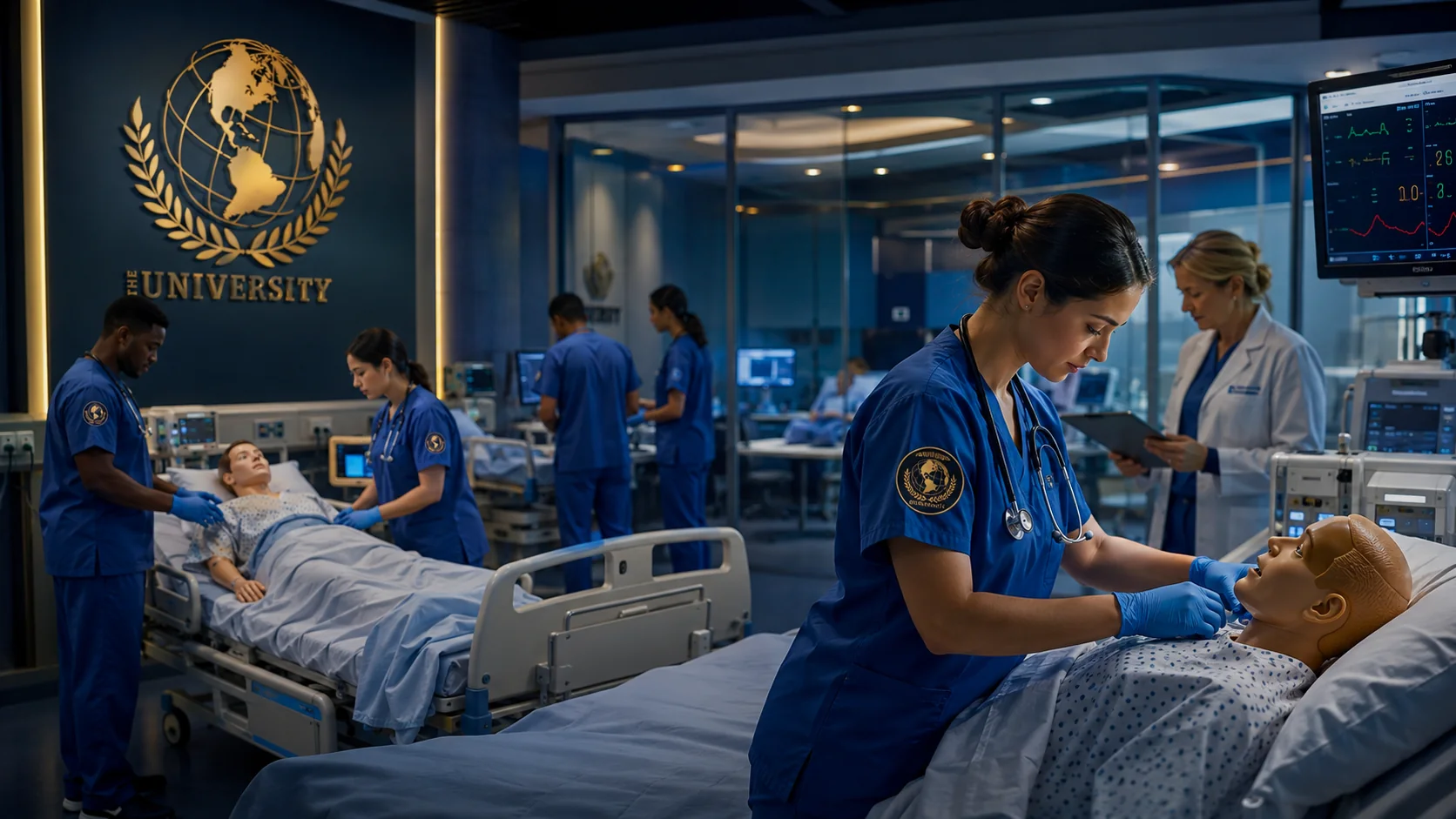
The physical model is organized by trade floor: code-compliant laboratories, shops, studios, kitchens, salons, simulation rooms, classrooms, student support, tool storage, and secure records. Mechanical and industrial programs need power, ventilation, drainage, loading, noise separation, and equipment maintenance. Beauty, culinary, wellness, health, and public-service programs carry different sanitation, privacy, supervision, and inspection requirements.
What Students, Families, Employers, and Partners Need to Know
The University is a career and technical trade-school system in development. It is not a traditional four-year university, is not accredited, does not grant degrees, is not approved for federal student aid, and does not represent its internal certificate as college credit. A program may prepare a learner for an outside examination or license, but the outside board, agency, employer, sponsor, or certifier makes its own decision.