TRADE FLOORS
Programs Organized Around Tools, Not Departments
A trade program is defined by the work a graduate can be handed on a Monday morning. The University's curriculum planning starts from that end of the problem: a foreman, a shop owner, or a service manager describes the tasks a first-year hire has to perform without supervision, and the program is built backward from that list. The mechanical trades group — HVAC service, residential and light-commercial electrical, plumbing rough-in and service, and welding — is being specified this way, with bench time and shop time carrying the majority of the hours rather than lecture.Explore Programs↗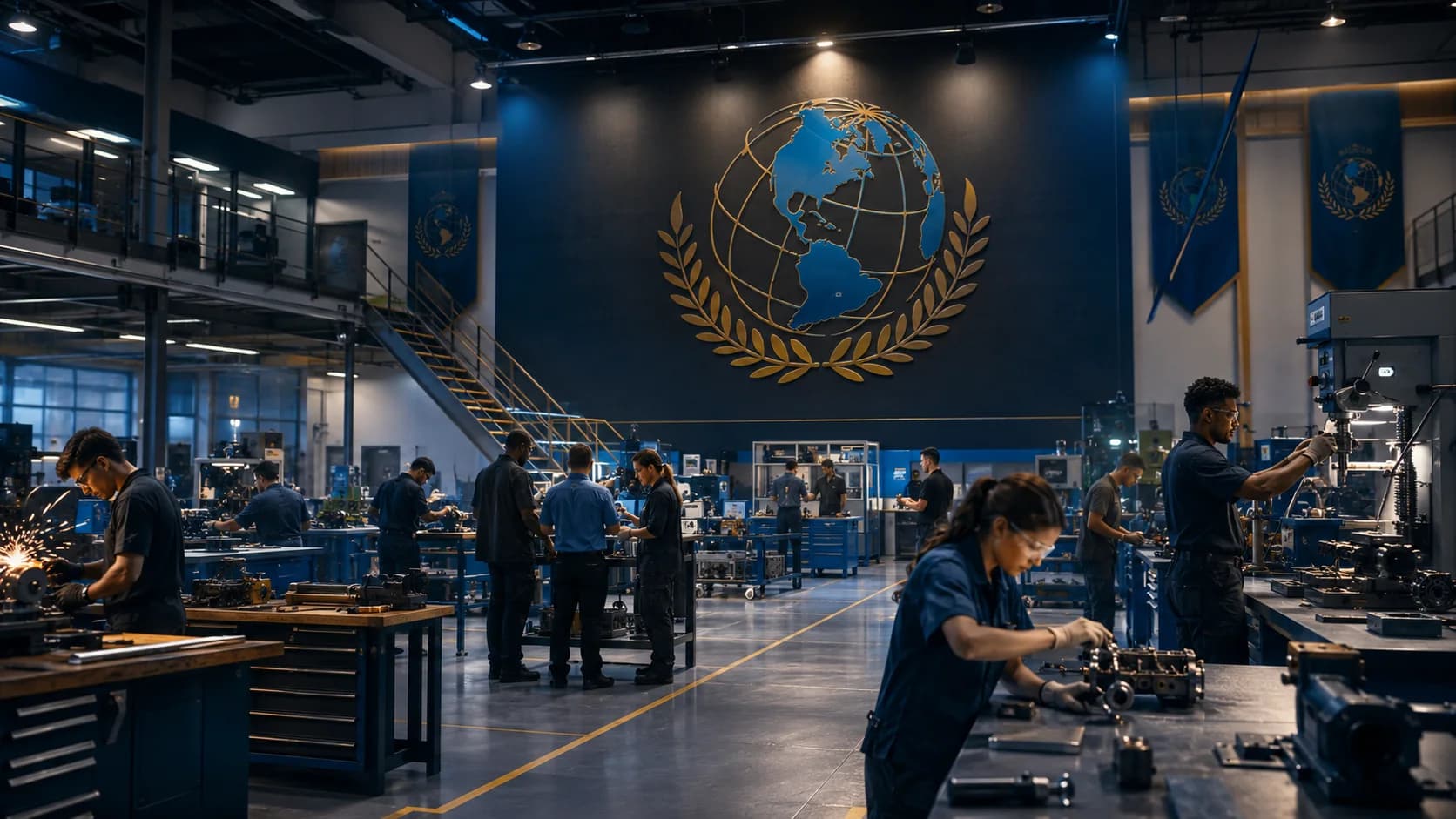
What this chapter requires in practice.
Around that core sit the trades that produce independent operators as often as employees. Barbering and cosmetology, culinary and beverage service, automotive repair, and commercial driving and logistics all end in a person who can either take a job or open a chair, a bay, a truck, or a kitchen. Those programs are designed to carry a business module alongside the technical one, because a barber who cannot price a service or a driver who cannot read a settlement statement is only half-trained.
The applied technology group — computer and network support, small-shop automation, digital media production, and business systems — is treated as a trade rather than as a computer-science pathway. The measure is the same as it is in the shop: can the graduate diagnose a fault, complete a build, hand off documentation, and bill for the work. Program scopes are still in specification, and the sequence in which trade floors open will follow instructor hiring and equipment funding, not marketing preference.
COMPETENCY BOARD
What must be understood before the work advances.
Built backward from the job
Task lists come from working foremen and shop owners before a syllabus is written.
Hours on the tools
Programs are designed so shop and bench work carry the majority of instructional hours.
Business module attached
Trades that produce independent operators pair technical instruction with pricing, billing, and licensing literacy.
- Credit transfer
- Not represented as transferable; recognition is solely the receiving institution's decision
- Federal financial aid
- Not eligible — no Title IV grants or federally backed student loans
- Licensure
- Granted by state boards and third-party certifiers; programs are designed to prepare, not to confer
- Instructional model
- Shop-hour weighted, taught by trade-qualified instructors, small cohorts
- Work-based learning
- Supervised placement with documented hours and supervisor sign-off, in design
ESSENTIAL CLARITY
Student and partner questions
What does “Built backward from the job” mean here?
Task lists come from working foremen and shop owners before a syllabus is written.
What does “Hours on the tools” mean here?
Programs are designed so shop and bench work carry the majority of instructional hours.
What does “Business module attached” mean here?
Trades that produce independent operators pair technical instruction with pricing, billing, and licensing literacy.